Monday, September 18, 2017

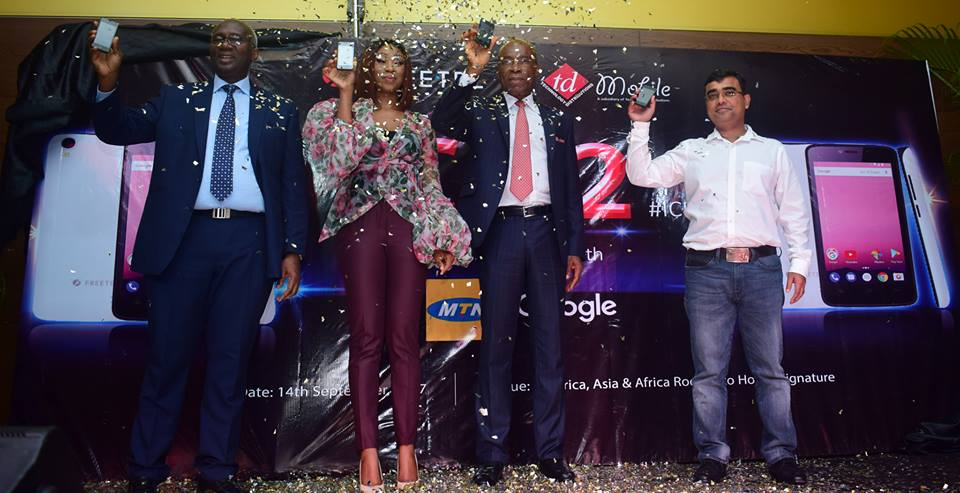
MTN Nigeria, TD Mobile partner to launch Freetel ICE 2 smartphone


MTN Nigeria and TD Mobile have introduced the Android smartphone ICE 2 from Freetel, Japan’s largest selling smartphone brand into the open market in the country.
Designed in Japan, the ICE 2 comes pre-loaded with Worldreader’s free e-library of 50,000 e-books and MTN apps such Music Plus. The Android 7.0 smartphone will sell for about NGN 13,000 at all major online and offline retail stores including MTN’s outlets.
According to TD Mobile, the new device is designed for the Nigerian market and it is just one of many devices from the stable of Freetel. The device is pre-loaded with MTN’s latest apps including MTN Music Plus. Additionally, the device is also pre-loaded with Worldreader’s free e-library of 50,000 e-books – an app that enables Nigerians to read their favourite book at no cost, according to a report by Telecompaper.
Although it is a mix of low-end and budget, the Freetel Ice 2 comes with a design language spoken by mid-range smartphones and higher-specced devices. It has a plastic build, but is designed in such a way that you’d be unsure of what it is made of when looking at it from afar.
Rahul De, MTN’s chief marketing officer speaking on the launch said, “We are excited by this partnership because our focus over the years has been on connecting millions of Nigerians to each other and the world, thus expanding access to information, entertainment and endless opportunities. The affordable Freetel Ice 2 takes us further along this journey, allowing more Nigerians make the transition to smartphones.”
Also speaking at the event, Gozy Ijogun, managing director, TD Mobile, disclosed that the launch of the Freetel Ice 2 is a fitting testimony to the company’s landmark strides in making ICT products and devices accessible, affordable and usable across Africa.
While, Adama Diallo, Google’s head of Nigeria for Android Partnerships, emphasised: “We have been truly impressed by the quality of the Freetel Ice 2 at this price point. We are excited to continue working with ecosystem partners like Freetel, TD & MTN to offer Android devices at every price point and connect more Nigerians to the internet.”
The Freetel Ice 2 comes with a 5.5-inch display which is rather large for a budget device. It has an HD (1280 * 720) pixel resolution with a 267 ppi pixel density, and its display is covered with 2.5D curved glass, yet another unusual feature in a low-end smartphone. The device is 9 millimetres thick.

The Device
The device is Google GMS certified, meaning that the device meets Google’s performance requirements and properly runs Google Apps. In addition, the device is powered by Google’s most recent Android operating system – Android 7.0 – and comes with the latest software and security updates including Google Play Protect: a newly-developed software which continuously works to keep one’s device, data and apps safe.

Memory & Performance
Under the hood, the Google Freetel Ice 2 is powered by a MediaTek MT6580 processor with four Cortex-A53 processing cores (quad-core) and a clock speed of 1.2GHz. Its graphics operations are carried out by an ARM Mali 400 GPU.
The processor has 1GB of RAM space to carry out its operations, offering basic multi-tasking functions. This RAM size is quite low and the phone can be used on at most two applications at a time if you want to avoid lags and crashes.
The user has 8GB of default internal memory to store multimedia files and install applications. A significant part of the ROM is already filled up with system applications and files, and it might not be sufficient for the user’s storage needs, in the event of which you can slot in a microSD card with a size of up to 32GB into its external microSD card slot to expand the default internal storage capacity.

Camera
Much should not be expected from a budget device in this department, and the Freetel Ice 2 keeps it low with a basic 5MP camera with autofocus and LED flash at the rear.
It also offers you the luxury of making video calls and taking basic selfies with a 2MP camera placed on the top of the front bezel.

Battery, Connectivity & Software
You will be able to use the smartphone for at least half a day before a recharge is needed, thanks to its 2800mAh Li-ion battery. The smartphone has dual SIM slots, but unfortunately, it lacks 4G LTE support which seems to be a deal-breaker for most smartphone users today. It’s a budget smartphone with other amazing specs at a low price, so we can’t say this is bad, either.
The smartphone runs on a stock flavour of version 7.0 (Nougat) of the Android operating system out of the box, and offers connectivity options like NFC, Wi-Fi 802.11 b/g/n, Bluetooth 4.2 and GPS.

Monday, September 11, 2017

Apple's New Phone to Be Called `iPhone X,' ?


Apple Inc.’s
most important new phone for years will be called the iPhone X, according to a leak of the company’s latest mobile operating system on Saturday.
Strings of software code inside of the leaked operating system, first detailed by Apple news website 9to5Mac, show the expected three new phones will be called the iPhone 8, iPhone 8 Plus, and iPhone X. App and game developer Steven Troughton-Smith discovered the names in the software and tweeted about it on Saturday.
The iPhone 8 and iPhone 8 Plus are successors to the current iPhone models, while the iPhone X is the premium version with an all-new design, crisper OLED screen, improved cameras, and a 3-D facial recognition scanner for unlocking the device.
The "X" in the iPhone’s name may be a reference to this model being a special 10th anniversary edition. The iPhone 8 and iPhone 8 Plus will look similar to the iPhone 7 and iPhone 7 Plus, but include faster processors, Bloomberg News has reported. The new devices will be unveiled at an event on Tuesday. An Apple spokeswoman declined to comment.
The leak comes not long after Apple accidentally published early HomePod speaker software that provided details on upcoming iPhone features. Apple Chief Executive Officer Tim Cook has criticized news reports on upcoming iPhones this year, saying the articles dented sales of current models. Still, expectations are running high for a blockbuster holiday season: In a recent survey by RBC Capital Markets, almost two-thirds of respondents said they would buy a new iPhone model sight unseen.
The leaked operating system corroborates earlier Bloomberg News reports that the premium X device will replace the usual Touch ID fingerprint scanner with a face unlock feature. Apple will call the enhancement Face ID, according to the code. The sensor will also be used for scanning a person’s facial expression and converting that into animated emojis for messaging, the code shows. Bloomberg recently reported that the premium model will lack a home button and instead use a series of gestures for controlling the device.
The leaked software also sheds more light on an upcoming version of the Apple Watch that has its own cellular connection (existing models have to be tethered to an iPhone). An Aug. 4 report by Bloomberg described this feature.
The code also includes a photo of the new Watch, with a red button on the side and dots in the middle of the screen to show cellular signal strength. The image and the leaked code indicate the device will be capable of making phone calls without an iPhone in range and that Apple will announce new colors, including a grey ceramic and a new gold tone.

Wednesday, August 30, 2017

First water-resistant BlackBerry will not have keyboard

TCL, the Chinese conglomerate that produces phones under the BlackBerry name, is going to broaden its appeal to more than just keyboard devotees. The company has revealed to Engadget that it will launch a full touchscreen device under the BlackBerry name at some point in October. It may not be a Z10, or even a Storm (or Thunder), but if you were looking to get your mitts on a keyboard-free BlackBerry, it's coming.
Granted, TCL's DTEK 50 and 60 phones were also all-screen, but this is different. Details are, perhaps obviously, fairly scarce about the as-yet unannounced device, but we managed to glean tidbits from TCL's François Mahieu. Mahieu explains that TCL will respect BlackBerry's reputation for building hard-wearing devices for clumsy international travelers who will be working in all weathers. The main feature, beyond the full-touchscreen, is the (planned) IP67 water and dust-proofing, as well as a battery rated to last for more than 26 hours of mixed use. Mahieu believes that durability and longevity will be two of the biggest selling points, a long-lasting phone that'll keep going long after your iPhone has conked out.
Mahieu feels bold enough to claim that he expects a number of iPhone and Galaxy users to "make the switch" to BlackBerry come October. Of course, these handsets now run Android, which means that it's far harder to make it stand out from the crowd. Mahieu continues to believe that BlackBerry's security know-how will enable TCL to deliver the "most secure Android phone in the world." Although given the failure of so many ultra-secure Android devices to sell, his confidence seems — at least right now — misplaced.
But TCL is used to combating cynicism with people looking down their nose at BlackBerry in its new after-life as a white label brand. Mahieu said that users shouldn't write off BlackBerry just because it doesn't stand toe-to-toe against Apple and Samsung. "We are there to play," he explained, "we're just playing with different cards," mostly by pushing its strengths of battery life, security and durability. As for pricing, it's likely that the device will cost less than other flagships.
Of course, we've already seen a BlackBerry device with a large display unencumbered by a physical keyboard. The Priv hid its physical input device in its slider, and so could actually work as a phone for touchscreen devotees. And given how well that device sold — prompting BlackBerry to abandon producing hardware altogether — it's going to be interesting to see how TCL can avoid history repeating.
TCL is banking on certified water and dust-resistance as a draw, and it's not clear how many people were waiting for that as a reason to make the switch. But Mahieu is hinting that the company is "marching towards millions" of device sales, although it's not clear how many models it needs to shift before it can be considered a success.

Tuesday, August 29, 2017

On-Demand-Video powerhouse, Iflix set sights on Nigeria

Iflix, the world’s leading Subscription Video on Demand (SVoD) service for emerging markets, announced the launch of its revolutionary service in Nigeria last Thursday at their offices famously known as “The Playground”.
The online video streaming platform which boasts of partnerships with over 220 studios and distributors allows users have access to international, regional and local content which ranges from Asian, European, American and African movies, TV shows, Documentaries and cartoons for as low as ₦799 monthly or an annual subscription at the rate of ₦6,392.
Speaking at the launch, Ngozi Madueke-Dozie, country manager, said the subscription service is targeted at the mass market.
‘We are excited to launch Iflix in Nigeria, we have a lot to offer from our wide range of movie selection from around the globe’, said Ngozi Madueke-Dozie.
She said, “The SVoD will be characterised by local contents that the Nigerian audience can relate with. We are excited to launch Iflix in Nigeria because we have a lot to offer from our wide range of movie selection from around the globe.
“We are especially thrilled to launch Iflix here because it offers affordability, variety, and convenience by giving our users an amazing selection of the best TV shows and movies from all over the world, to stream or download on any device of their choice for less than N800.
"You can watch 20 minutes of video content with 33MB of data so that means you can watch whole shows and movies without exhausting too much data in the process.”
Madueke-Dozie further said that the contents to be supplied by Iflix would meet up with local and global censorship.
But for this innovative company, it has not always been easy being Iflix. When you run a business called iflix that streams movies and box-sets into homes from Iraq to Indonesia, being known as the “Netflix of emerging markets” is inevitable. But it is an inevitability that causes co-founder and chief executive Mark Britt to bristle. Rather, he prefers to highlight the similarities to Spotify — content on both the music streaming service and iflix is curated by celebrities and aficionados.
Certainly the battles facing Mr Britt, an Australian based in Kuala Lumpur, in building the two-year-old company are far removed from those faced by his opposite number at Netflix. Reed Hastings never had to work out a way of collecting money without credit cards, or to fret about data servers — actual physical boxes holding 170 terabytes of House of Cards et al — being stranded at ports.
And Netflix makes money. Iflix, valued at about $600m and backed by Rupert Murdoch’s Sky TV and Liberty Global, is generating annual sales of $100m. “Are we making revenues? Absolutely. Are we making money? No,” says Mr Britt, speaking in Hong Kong at the Rise technology conference last month.
Price and local content is iflix’s competitive edge on Netflix, argues Mr Britt. Yet building the first emerging market video platform has entailed some unconventional methods. By way of market research Mr Britt, a lawyer by training, talked to stores selling pirated DVDs, assuming they would know what was hot.
Iflix launched in Nigeria last week. 

Saturday, August 26, 2017

Things the Samsung Galaxy Note 8 can do that the Galaxy S8 can't

Beyond a slightly larger display and a somewhat boxier design, the Note 8 has kept a few features to itself when compared to the Galaxy S8 and S8 Plus.

Write on the screen
A staple of the Note line has always been a big screen and the S-Pen. The Note 8's S-Pen is waterproof, more sensitive, and has a smaller tip for easier writing.
Samsung improved two S-Pen features on the Note 8, including Screen Off Memo and translation using the pen.
Screen Off Memos is now capped at 100 pages of notes, reminders, sketches or whatever you want. Translate is no longer restricted to single words and can now do complete sentences.

Camera tricks
This is an obvious one, given that it would require a hardware upgrade in order for the S8 to gain an extra camera.
With the second lens on the back of the Note 8, you can take photos that contain more depth-of-field information, which leads to a bokeh effect. In other words, the subject of your photo is in focus while the background is blurry. And with the Note 8, you can actually adjust just how much bokeh is used, before or after the photo is snapped when using the

Live Focus feature.
Another cool feature, Dual Capture, gives you the ability to zoom out on a photo captured with both rear cameras, showing the entire scene instead of just the original subject.

Live Messages
Similar to Apple's Digital Touch feature, Live Messages will let you draw or write a message, and then share it in animated form.
Using the S-Pen you can draw on top of a photo or handwrite a message, and the Note 8 will record every pen stroke. The shared image is a standard animated GIF and should be playable regardless of the service used to send it.

App Pair
Multiwindow apps are nothing new to Samsung devices, with the Korean company implementing the feature well before Google integrated it into Android Nougat. With the Note 8, Samsung is making it easier to repeatedly use two apps at the same time.
The feature is called App Pair and is part of the Edge screen feature. Using App Pair, you pick two apps, say Calendar and Messages, as a shortcut. Then when you tap on the pair, both apps are opened in multiwindow mode.
You can set any two apps as a pair, as long as each one supports multiwindow mode.

Samsung Experience
Some of these features, Live Messages and App Pair, for example, don't rely on hardware. There's nothing stopping Samsung from updating the Samsung Experience software running on all current Galaxy devices with these same features.
A Samsung representative confirmed to CNET some of the software-based features would indeed eventually make their way to the Galaxy S8 and S8 Plus, but stopped short of providing a time frame or specific list.

Wednesday, August 23, 2017

StarTimes boosts Digital Switch Over with Digital TV sets

As part of efforts targeted at encouraging the transition from analogue to digital transmission in Nigeria, Startimes has made available in the country, digital television sets, even at a lowered price.
The pay TV Company said it is committed to new innovations and technologies that enhance digital TV experience for Nigerians over the years, and is now offering one of the most endurable Digital LED TVs at affordable prices.
The new StarTimes integrated digital TV sets are built with an upgradeable operating system, full HD LED screen category, 2 HDMI ports, 5MM Bezel, 1920*1080 resolution, 8W*2 digital noise filter system and 100-240V, 75W Voltage. It has 12 months’ warranty and are all pre-installed with over 100 pay TV and free-to-air channels that allow users enjoy instant access to digital TV.
The Marketing Director, Qasim Elegbede, said as the fastest-growing digital TV operator in Africa, StarTimes is passionate about the digital TV revolution. Nigerians will continue to enjoy the best of digital television entertainment and experience with a plethora of enjoyable programs in higher definition (HD) images at very pocket-friendly rates.
“StarTimes Digital TV will enhance the viewing experience of Nigerians while offering credible, quality and outstanding entertainment experience at a quite competitive price. With five sound modes and an earphone port, the rich acoustics delivered crisp surround sound effect to keep you on the edge of your seat. It enables you to conveniently enjoy movies, music and other audio and visual resources stored in your flash disks, hard disks or other devices via the USB Port or HDMI port with a cinematic experience,” he added.

Tuesday, August 22, 2017

Amazon, Facebook, Google, other Tech majors face less patronage in Donald Trump white house


Google is not alone in a fall from grace. Tech companies -- including Facebook Inc. and Amazon.com Inc. -- that were previously lauded as innovators are facing increased scrutiny over their size, their hiring practices and whether online news feeds skew liberal.
"The mood in Washington, at least on the right side of the aisle, is more critical of companies like Google and Amazon,” said Fred Campbell, a former Republican FCC aide and director of Tech Knowledge, which promotes market-based policies.
The shift in tone comes as Congress and the Trump administration consider changing tax, energy and immigration policies important to Silicon Valley. A regulation that protects data flows is already slated for gutting by the Federal Communications Commission, and, in Congress, a law has been proposed that would bring internet companies under a privacy regulator. Another would increase legal liability for website operators as a way to combat online sex trafficking.
Meanwhile, tech’s made no secret of its distaste for Trump policies. Alphabet Inc.’s Google, Apple Inc. and Facebook issued critical statements after the president proposed a ban on transgender people in the military, stepped away from the Paris climate accords and issued a ban on travel from majority Muslim nations.
Advisory Councils
The Aug. 12 street violence in Charlottesville, Virginia, provoked another rift. After the president said “both sides” shared blame for the fighting, Apple Chief Executive Officer Tim Cook told his staff he disagreed with Trump. So many executives, including Intel Corp.’s Chief Executive Officer Brian Krzanich, quit White House advisory councils last week in protest that Trump ended up disbanding them.
Amid the turmoil, Trump unloaded on Amazon, tweeting that the company is hurting other retailers, and causing shares in the online retailer to fall. “Towns, cities and states throughout the U.S. are being hurt - many jobs being lost!” Trump said in the tweet.
It was the latest conservative broadside on the technology companies over their size, influence and promotion of social policies on immigration, transgender rights and other matters.
More: Trump Says in Tweet Amazon Does ‘Great Damage’ to Retailers
Oregon Republican Representative Greg Walden, the chairman of the Energy and Commerce Committee, challenged tech and broadband executives to appear next month as his committee considers undoing the Obama-era net neutrality rules that Silicon Valley supports. In what could be interpreted as a snub, executives didn’t respond to the invitation by the deadline -- which has been extended.
“Republicans have always been fine with most of tech, because Republicans have usually defaulted pro-business,” said Bruce Mehlman, a Republican lobbyist and former Commerce Department official said in an interview. “This is less about any one issue and more about the new populist wing of the Republican party -- populism is suspicious of bigness, and the biggest companies now are tech.”
In this atmosphere, public-policy asteroids can strike suddenly and dent tech’s image in the capital. Google dismissed James Damore, an engineer who wrote about gender differences and said the company had a “left bias” that silenced dissenters. Washington noticed.
Why Republicans Want to Nix U.S. Net Neutrality Rules: QuickTake
“The mistreatment of conservatives and libertarians by tech monopolies is a civil rights issue,” Representative Dana Rohrabacher said in a tweet using the hashtag #googlememo. The California Republican is concerned tech giants may be excluding top talent for political reasons, said his spokesman, Ken Grubbs.
Trump adviser Kellyanne Conway tweeted an op-ed that Damore wrote in the Wall Street Journal about his firing, in which he called Google “ideologically driven and intolerant of scientific debate and reasoned argument.”
Fox News’s Tucker Carlson said Damore’s dismissal showed Google couldn’t be trusted, for instance in ways its algorithms determine where to rank fake news when returning search results. “Google should be regulated like the public utility it is, to make sure it doesn’t further distort the free flow of information to the rest of us,” Carlson said on his Aug. 14 show.
Others on the right are sounding similar themes. Dominant companies such as Facebook, Twitter Inc. and Google “represent themselves as politically neutral while systematically promoting liberal views and limiting or even banning conservatives,” Phil Kerpen, head of the American Commitment policy group said in a memo urging congressional action that was obtained by Bloomberg News.
Why Google’s Gender Struggle Echoes Across Tech: QuickTake
Kerpen advocated “clear disclosure of how traffic is treated” and “enforcement actions if they violate those representations,” according to his memo. Kerpen, a strategist who has worked for groups including the billionaire Koch brothers’ Americans for Prosperity, didn’t return phone calls and emails.
Amazon has become a target at least in part because of its size. The company with about 70 percent of all e-book sales and 30 percent of all U.S. e-commerce drew criticism from Trump that had started on the campaign trail when Trump said in February 2016: “Believe me, if I become president, do they have problems. They’re going to have such problems.” Trump’s also objected to coverage by the Washington Post, which is owned by Amazon’s Chief Executive Officer Jeff Bezos, for instance calling the newspaper "FAKE NEWS" in a June tweet.
In July, a Democratic lawmaker from Rhode Island, David Cicilline, called for hearings on the online retailer’s proposed purchase of grocer Whole Foods Market Inc. Experts and analysts have largely dismissed antitrust threats, in part because the food-store chain has just 1.6 percent of the U.S. grocery market, according to Euromonitor.
Trump, Tech Clash Over Visas for Skilled Immigrants: QuickTake
Democrats in their “Better Deal” package of policy proposals released in July called for tougher merger reviews. Regulators must “must explicitly consider the ways in which control of consumer data can be used to stifle competition or jeopardize consumer privacy,” according to the proposals.
Tech companies are spending more to make their case in the new Washington, and staffing up for better footholds in the Trump administration. Google hired Max Pappas, a veteran of Texas Republican Senator Ted Cruz’s office and the libertarian FreedomWorks PAC.
Google boosted its lobbying expenditure to $9.5 million in the first half of this year, a nearly 18 percent increase from about $8 million a year earlier, according to disclosure filings. Facebook’s first-half lobbying expenditures rose too, by about 12 percent to $5.6 million from almost $5 million. Amazon spent $6.1 million, up from $5.7 million for the same period a year earlier.
Google once had Barack Obama’s ear, served as a revolving door for White House staff and saw its political agenda advance. In Donald Trump’s Washington, some conservatives say it’s gotten so powerful it should be regulated like a public utility.


Via: Bloomberg news

MTN’s Potential Exit from Nigeria: Examining the Impact of the Proposed 5% Telecom Tax

MTN Nigeria, the largest telecom provider in the country, has hinted at the possibility of exiting the Nigerian market should a proposed 5% ...