Monday, November 27, 2017

ASUS and AMD Launch half-a-million Naira Gaming Device!

ASUS has introduced the industry’s first gaming laptop powered by AMD’s eight-core Ryzen 7 1700 processor. The ASUS ROG Strix GL702ZC-WB74 is a 17.3” desktop replacement machine that uses the desktop-class CPU and a powerful GPU to offer peak gaming performance to its users.
Since the system relies on numerous desktop-class components and an inexpensive FHD display panel, the final pricetag not too high for a gaming notebook, with the laptop launching for $1499. Meanwhile, ASUS will also offer an even more affordable version powered by AMD’s six-core Ryzen 5 1600, as well as a more advanced model with a 120 Hz display panel.
To a large degree, the ASUS ROG Strix GL702ZC can be considered to be AMD’s flagship mobile gaming platform, as it supports all of the company’s latest technologies and can scale in terms of performance and pricing to satisfy different requirements and customers. In fact, the ROG Strix GL702ZC is the first all-AMD gaming laptop in years as makers of mobile PCs avoided AMD’s FX-series CPUs due to power consumption and did not use AMD's APUs due for gaming computers because of performance concerns.
The notebook relies on a a couple different AMD 65W desktop processors — the six-core Ryzen 5 1600 or the eight-core Ryzen 7 1700 — as well as AMD’s Radeon RX 580 GPU with 4 GB of memory (the manufacturer does not disclose specs of the part, but we are investigating). The graphics processor supports AMD’s FreeSync dynamic refresh rate technology for both internal and external displays. Speaking of displays, ASUS will offer GL702ZC with either 60 Hz or 120 Hz FHD IPS panels, so FreeSync support will be especially handy in the second case. To cool down the two key chips of the notebooks, ASUS uses its Hyper Cool Duo-Copper cooling system featuring heat pipes and two fans that are said to cool down the CPU and GPU independently.
Moving on to other internal parts of the ROG Strix GL702ZC. The GL702ZC-WB74 model that ASUS is formally introducing today comes with 16 GB of DDR4 memory, a 256 GB SATA SSD, and a 1 TB hard drive. Meanwhile, more advanced configurations may expand DRAM to 32 GB, upgrade the SSD to 512 GB, and install a 1 TB SSHD or a fast 7200 RPM HDD. By contrast, entry-level configs are going to feature 128 GB SATA SSDs.

As for I/O capabilities, the ROG Strix GL702ZC looks like a fairly standard model here. The notebook comes with a GbE port, an 802.11ac Wi-Fi + Bluetooth 4.2 module, three USB 3.0 Type-A connectors, a USB 3.1 Gen 2 Type-C header, an SD card reader, an mDP 1.4 port, an HDMI output, an HD webcam, a TRRS jack and so on. The machine features a Chiclet keyboard with marked WASD keys, 30-key rollover support as well as an isolated numeric pad.
With two display outputs, the ROG Strix GL702ZC can handle a couple of external monitors (with FreeSync support), which is okay for a relatively inexpensive gaming machine. In addition, the HDMI port and three USB-A connectors allow users to plug VR headsets to the laptop to play virtual reality games.
The machine is not as bulky as flagship offerings featuring more advanced GPUs and storage sub-systems But since the ROG Strix GL702ZC is still a desktop replacement laptop, it is rather thick (34 mm) and heavy (3 – 3.2 kilograms). ASUS does not disclose specific battery runtime figures, but a 76 Wh battery should provide enough time do an urgent work while on the go.
The ASUS ROG Strix GL702ZC-WB74 is not yet available in Nigeria but already available in the U.S. from the ASUS Store, Amazon, and other retailers at an MSRP of N550,000 ($1499). In the meantime, it will be very interesting to see how much ASUS will charge for the lower-end SKU with the Ryzen 5 1600 as well as the higher-end model with a 120 Hz display and a 512 GB SSD.

Tuesday, November 7, 2017

Microsoft is now selling a Verizon compatible HP Elite x3

Even though HP's Elite x3 Windows phone launched well over a year ago, rumors of a Verizon-compatible flavor started floating about over the summer. Those rumors seemed to be confirmed when Microsoft announced which phones would get the Windows 10 Mobile Fall Creators Update, and the Verizon Elite x3 was on it, even though it's never been formally announced.
Today though, the handset actually showed up on the Microsoft Store, priced at $599. Interestingly, the unlocked GSM model is back up to $799, after being priced at $599 for months.
Other than the cellular radios, the Verizon Elite x3 is exactly like the unlocked one. It includes a 5.96-inch 1440p AMOLED display, a 16MP rear camera, 64GB of internal storage, a fingerprint reader, and iris recognition. The device also comes with the Desk Dock, HP's docking solution for connecting the phone to an external display and peripherals for a desktop experience, which Microsoft calls Continuum.
According to the fine print on the listing, the promotional price tag of $599 will only last until November 20.
Even though Elite x3 is more than a year old, it still has some pretty impressive specs. The phone packs a Qualcomm Snapdragon 820 processor with 4GB of RAM. Although the 820 processor isn’t as fast as current flagship phones like the Pixel 2 XL or Samsung Galaxy S8, it should still zip along for most business tasks.
The Elite x3 also features 64GB of internal storage that can be expanded to 1TB through the MicroSD card slot. A 5.96-inch AMOLED display accompanies Bang & Olfuson stereo speakers and and an 8MP camera. The back of the phone features a 16-megapixel camera. HP also included a fingerprint sensor and support for Windows Hello, which allows you to unlock the phone with an iris scan.
What sells the Elite x3 however, is its ability to transform into a makeshift computer. The bundled Desk Dock lets you to connect your phone to an external monitor and peripherals, while the Lap Dock transforms the phone into a 12.5-inch laptop. Windows Continuum and HP Workspace allows you to run a limited number of Windows apps through the phone.
The HP Elite x3 will probably be the last Window 10 mobile phone on the market. Last month Microsoft executive Joe Belfiore tweeted that the company was no longer focused on Windows Mobile and that he was currently using a Samsung Galaxy S8 with a suite of Microsoft apps installed. The Microsoft Store is currently selling the Samsung Galaxy S8 alongside the Elite x3.


Via: Phone Arena

Monday, November 6, 2017

Lenovo buys stake in Fujitsu PCs as Revenue Tops Estimates

Lenovo and the Development Bank of Japan have coordinated to acquire stake in Fujitsu's computing branch, with Lenovo purchasing a majority share at 51% and DBJ receiving 5% in the deal. Fujitsu will net about $245.45 million (28 billion yen) as part of the purchase contract, of which Lenovo will pay about $156.7 million in cash.   "The joint venture will focus on the research, development, design, manufacturing and sales of Client Computing Devices (CCD) for the global PC market," reads the press release announcement. 
"Through this strategic collaboration, Fujitsu and Lenovo aim to drive further growth, scale and competitiveness in the PC businesses both in Japan and worldwide," the joint statement said. "The joint venture will leverage Fujitsu's capabilities in global sales, customer support, R&D, highly-automated and efficient manufacturing and systems integration that meet customers' demand. Furthermore, it will benefit from Lenovo's global scale and presence." This is coming after posting its strongest revenue growth in two years amid signs the PC market is stabilizing.
China’s largest PC maker reported a 5 percent jump in revenue to $11.8 billion in the quarter ended September, surpassing projections for $11.3 billion and marking the biggest rise since the same period of 2015. Net income fell 11 percent to $139 million, which was bolstered by accounting gains. Lenovo rose as much as 5 percent in the afternoon, erasing year-to-date losses.
Lenovo is struggling to find growth in its key divisions of personal computers, smartphones and servers. While it lost top spot in PCs to HP Inc., the market shrinkage of the past few years is easing and Chief Executive Yang Yuanqing is taking costs out of a mobile business that’s made little progress since buying Motorola for $2.9 billion. On Thursday, the company announced it will buy Fujitsu’s client computing division for at least 17.85 billion yen ($157 million), adding the Japanese name to its portfolio.
“A healthier PC market may finally aid Lenovo’s platform almost as much as it has HP or Dell,” Anand Srinivasan and Wei Mok, analysts at Bloomberg Intelligence, said before the release. “The server and mobile platforms need structural fixes.”
PC shipments climbed 17 percent from the previous quarter, allowing Lenovo to arrest market share losses. The company’s struggling smartphone division also made headway into Latin America and Western Europe.
“Lenovo’s business lines remain weak in the past quarter and now it has cash flow difficulties,” said Qian Kai, an analyst with CICC. He noted that Lenovo gained more than $100 million in net income from tax rebates. “I don’t foresee Lenovo turning around its smartphone business. It lags far behind market leaders in China and in the markets like India where they did well, the challenge is growing thanks to companies such as Xiaomi.”
The company continues to face rising costs for components such as memory chips. Chief Operating Officer Gianfranco Lanci previously said he expects costs for essential components such as memory chips to keep rising throughout the rest of the year, albeit at a slower pace.
“Our mobile business turnaround is still in progress,” Yang said in a statement.
While the 2005 acquisition of International Business Machines Corp.’s PC division paid off by lifting Lenovo closer to the top of the market, deals in 2014 for IBM’s low-end server unit and Motorola haven’t gone as smoothly. It’s now re-enlisted the executive who steered the Motorola acquisition to run its Chinese PC arm to breathe new life into the business.


Via: Tweaktown.com

Thursday, November 2, 2017

itel Mobile launches 4G-ready S21in India...celebrates 10yrs with product launch in Lagos

One of the fastest growing Asian brands, itel Mobile has launched a new smartphone — S21 into the market. The latest entrant comes with a dual front camera function, fingerprint sensor and dual social media accounts.
The smartphone sports a 5-inch FWVGA IPS display and is powered by a 1.1 GHz quad-core processor paired with 1GB of RAM and Mali-T860 MP1 GPU. It has 16GB of internal storage which is expandable up to 32GB via MicroSD card.
The device runs on Android 7.0 Nougat with multi-window view, quick switching between apps, and a direct reply feature. The smartphone also enables users to access dual social media accounts including Facebook, Twitter, Instagram, and WhatsApp.
The device is equipped with an 8MP rear camera with autofocus, while there is a dual camera setup (2MP + 5MP) up front. Connectivity options include, 4G VoLTE and  ViLTE, Wi-Fi, Bluetooth, GPS. The device draws power from a 2700mAh battery. The itel S21 is available across India in three colours: Moonlight Silver, Champagne Gold, and Elegant Black.
Itel Mobile, one of the world’s fastest growing mobile brands, has always provided a variety of reliable and trendy communication devices for people in emerging markets. This time, it celebrates its 10th anniversary, unveiling its latest mobile devices, itel S12 and S32 at Sheraton Hotel in Lagos.
Year on year, the mobile phone giant rolled out affordable and reliable mobile phones without compromising on quality hence the reason for its mobile success in Africa as it understands the major need for the African consumer.
Speaking at the event, the Marketing Communications Manager of itel mobile, Oke Umurhohwo said the newly launched itel Selfie centric phones are affordable, sleek and of high quality with one selling for N24, 000 and the other N32, 000 respectively.
“At itel Mobile, we understand the demand of our customers, hence the reason we are introducing the most affordable dual selfie camera phones in Africa. These new itel phones come with an innovative front camera that can accommodate more people in a single selfie.”
“Compared to the previous S31, the latest S32 boasts of 63° portrait lens for solo selfie and an ultra-wide 86° angle lens which makes it easy for users to take group selfie.”
Adding he said, “Judging by the itel mobile trajectory, it is hard not to be excitement for what the brand intend to achieve in the future. This can be seen today with launch of three new models S32, S32 LTE and S12; a clear upgrade on previous products. The three new models all come with Dual selfie cameras as well as fingerprint, with the S32 LTE version having 4G network ability.”
Commenting on the success of itel mobile, Umurhohwo said itel have always put the customers at the forefront of their business.
“We believe that by providing customers with affordable, reliable and trendy mobile devices, we can allow more people to get connected with the rest of the world in an efficient way.”
“With such belief in mind, itel is continually making efforts to get close to customers and understand their needs and expectations in various ways, so as to continue to meet their expectations.”
Over the past decade, the brand has become a household name in the industry spreading its presence to over 50 countries across the globe. Last year, itel sold a landmark of 50 million devices, to become the top mobile brand in Africa.
itel mobile positioned itself in Africa inspired by a mission to empower everyone with seamless mobile communication through reliable, trendy and affordable mobile devices.
Giving back to the community is also at the core of itel Mobile’s philosophy. This has made the brand develop a robust CSR policy on education via the “Love Always On” initiative. Through the Love Always On campaign, various life-touching projects geared towards empowering pupils and students in different schools were carried out. Some of such projects include provision of education materials to school children, scholarships to brilliant students, as well as sponsorship of different student events across different tertiary institutions. As at October, 2017; over 1,300 students have benefited directly from itel mobile education support initiative.
Speaking on service care issue, Oke said, the company has provided trained engineers, as well as made spare parts available for free software repairs.
“It’s been 10 years of a fantastic journey. It is a milestone, we have grown over the years and this means beyond just selling our phones, we take service delivery more seriously and follow our users all the way as we are a people friendly phone.


Via: http://thenationonlineng.net

Tuesday, October 10, 2017

After 20 Years, AIM Will Shut Down in December

AIM, AOL’s hugely popular instant messenger service that was a coming-of-age internet experience for many in the late 1990s and early 2000s, will officially shut down on Dec. 15.
In a statement on the decision, the company says, “AIM tapped into new digital technologies and ignited a cultural shift, but the way in which we communicate with each other has profoundly changed. As a result we’ve made the decision that we will be discontinuing AIM.”
The reactions on Twitter ranged from sadness to nostalgia to surprise that the service still exists.
AIM and its signature yellow running man launched in 1997 and was one of the first widely used free chat services. “Instant messages allow communication that is faster than e-mail but more personal than a chat room,” a USA Today piece from 1999 marveled. AIM fought for users against competitors like MSN Messenger, which shut down in 2014, and Yahoo Instant Messenger, which discontinued service in 2016 but later revamped with the same name. Over the past decade, though, AIM has experienced upheavals, from the major cuts in its staff in 2012 to Verizon’s $4.4 billion acquisition of AOL in 2015. And with texting, Gchat, Facebook, and others stepping in as the primary forms of communication for the AIM generation and beyond, it’s no surprise that these instant messaging services are closing shop.

Users can salvage mementos from their chat logs by downloading files and images from AIM before its door closes. But people who want to save their Buddy Lists full of emo screen names and eRraTiC LetTeR CaSInG are out of luck. Perhaps these bits of nostalgia, like those carefully curated quotes and song lyrics as away messages, are best sent the way of Friendster and Nokia phones.

Monday, September 25, 2017

Seems WeChat has officially ended support for Windows phone!

The popular china-based messaging and calling app, WeChat is no longer available for Windows Phone anymore. Tencent recently stopped updating the Windows 10 Mobile app and it appears that you cannot use it anymore on your Windows Phone whereas the app is still available for Windows 10 PCs and Tablets.
WeChat is one of the best all-in-one communications app that lets you easily connect with family and friends across countries for free. First spotted by a German site, for the security reasons, WeChat has been (temporary) discontinued for Windows Phone.
You can still download and install WeChat on Windows 10 Mobile but when you will open the app an error will be display. WeChat is asking the users to run the app on Android or iOS instead of Windows Phone. It might be a server-side mistake, there is, however, no confirmation from the Chinese firm yet.
WeChat’s app based on Universal Windows Platform is still available but it works only on Windows 10 PCs and Tablet. It could be sideloaded to Windows 10 Mobile but the app isn’t optimized for the smartphones yet and it is highly unlike that the company would do in future.
So another day, another big name leaving the Windows Store on mobile. It's par for the course at this point as Windows 10 Mobile is all but dead and therefore not much of a surprise that WeChat, the largest and most popular app in China, is leaving Windows Phone and taking with it its 700 million strong user base.
Tencent, the company behind WeChat, had already indicated its irritation at Microsoft's lack of effort in the mobile market and had refrained from building an app on Windows 10 Mobile.
Offering services ranging from messaging to banking, WeChat is an integral part of online life in China and its loss is certain to shatter any expectations Microsoft may have had of, at the very least, retaining its current standing in the Chinese mobile industry. The company does still have an app for Windows 10 on the desktop so China may not yet be entirely out of Microsoft's grasp but it's certainly looking like it. There has been no official statement from Microsoft on the situation yet.

Monday, September 18, 2017

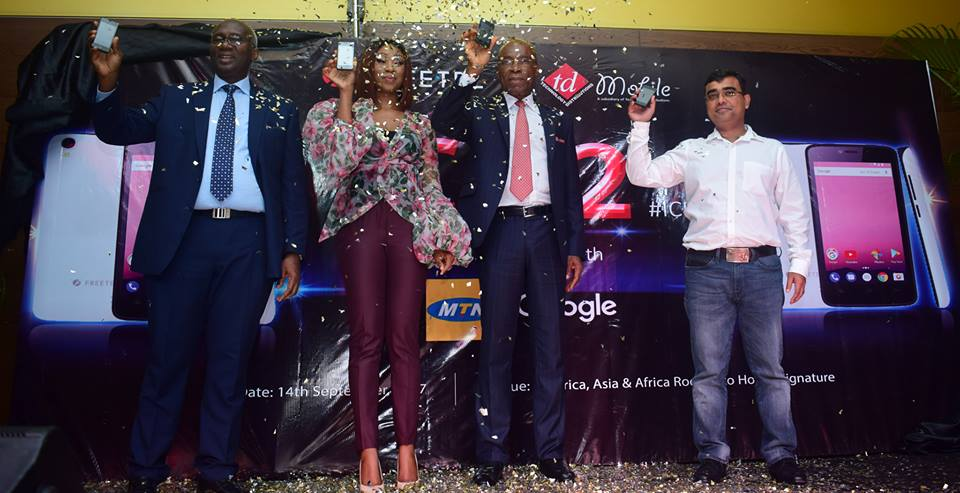
MTN Nigeria, TD Mobile partner to launch Freetel ICE 2 smartphone


MTN Nigeria and TD Mobile have introduced the Android smartphone ICE 2 from Freetel, Japan’s largest selling smartphone brand into the open market in the country.
Designed in Japan, the ICE 2 comes pre-loaded with Worldreader’s free e-library of 50,000 e-books and MTN apps such Music Plus. The Android 7.0 smartphone will sell for about NGN 13,000 at all major online and offline retail stores including MTN’s outlets.
According to TD Mobile, the new device is designed for the Nigerian market and it is just one of many devices from the stable of Freetel. The device is pre-loaded with MTN’s latest apps including MTN Music Plus. Additionally, the device is also pre-loaded with Worldreader’s free e-library of 50,000 e-books – an app that enables Nigerians to read their favourite book at no cost, according to a report by Telecompaper.
Although it is a mix of low-end and budget, the Freetel Ice 2 comes with a design language spoken by mid-range smartphones and higher-specced devices. It has a plastic build, but is designed in such a way that you’d be unsure of what it is made of when looking at it from afar.
Rahul De, MTN’s chief marketing officer speaking on the launch said, “We are excited by this partnership because our focus over the years has been on connecting millions of Nigerians to each other and the world, thus expanding access to information, entertainment and endless opportunities. The affordable Freetel Ice 2 takes us further along this journey, allowing more Nigerians make the transition to smartphones.”
Also speaking at the event, Gozy Ijogun, managing director, TD Mobile, disclosed that the launch of the Freetel Ice 2 is a fitting testimony to the company’s landmark strides in making ICT products and devices accessible, affordable and usable across Africa.
While, Adama Diallo, Google’s head of Nigeria for Android Partnerships, emphasised: “We have been truly impressed by the quality of the Freetel Ice 2 at this price point. We are excited to continue working with ecosystem partners like Freetel, TD & MTN to offer Android devices at every price point and connect more Nigerians to the internet.”
The Freetel Ice 2 comes with a 5.5-inch display which is rather large for a budget device. It has an HD (1280 * 720) pixel resolution with a 267 ppi pixel density, and its display is covered with 2.5D curved glass, yet another unusual feature in a low-end smartphone. The device is 9 millimetres thick.

The Device
The device is Google GMS certified, meaning that the device meets Google’s performance requirements and properly runs Google Apps. In addition, the device is powered by Google’s most recent Android operating system – Android 7.0 – and comes with the latest software and security updates including Google Play Protect: a newly-developed software which continuously works to keep one’s device, data and apps safe.

Memory & Performance
Under the hood, the Google Freetel Ice 2 is powered by a MediaTek MT6580 processor with four Cortex-A53 processing cores (quad-core) and a clock speed of 1.2GHz. Its graphics operations are carried out by an ARM Mali 400 GPU.
The processor has 1GB of RAM space to carry out its operations, offering basic multi-tasking functions. This RAM size is quite low and the phone can be used on at most two applications at a time if you want to avoid lags and crashes.
The user has 8GB of default internal memory to store multimedia files and install applications. A significant part of the ROM is already filled up with system applications and files, and it might not be sufficient for the user’s storage needs, in the event of which you can slot in a microSD card with a size of up to 32GB into its external microSD card slot to expand the default internal storage capacity.

Camera
Much should not be expected from a budget device in this department, and the Freetel Ice 2 keeps it low with a basic 5MP camera with autofocus and LED flash at the rear.
It also offers you the luxury of making video calls and taking basic selfies with a 2MP camera placed on the top of the front bezel.

Battery, Connectivity & Software
You will be able to use the smartphone for at least half a day before a recharge is needed, thanks to its 2800mAh Li-ion battery. The smartphone has dual SIM slots, but unfortunately, it lacks 4G LTE support which seems to be a deal-breaker for most smartphone users today. It’s a budget smartphone with other amazing specs at a low price, so we can’t say this is bad, either.
The smartphone runs on a stock flavour of version 7.0 (Nougat) of the Android operating system out of the box, and offers connectivity options like NFC, Wi-Fi 802.11 b/g/n, Bluetooth 4.2 and GPS.

MTN’s Potential Exit from Nigeria: Examining the Impact of the Proposed 5% Telecom Tax

MTN Nigeria, the largest telecom provider in the country, has hinted at the possibility of exiting the Nigerian market should a proposed 5% ...